How Single-Source U.S. Manufacturing Shortens Your Wait
Here’s a scenario that might sound familiar in the shop. A crucial production run is ready to start. Your skilled team is standing by, tools in hand and the schedule is tight. But instead of diving into the value-added work they do best, they’re sorting through bulk containers, hunting for the right screws, verifying hardware counts and preparing sub-components. Valuable time and mental energy are spent not on building, but on gathering and preparing.
The Weight of the “Before” Work
Why Kitting Matters
A dedicated kitting involves gathering all the individual components required for a specific assembly or production run and packaging them together as one complete, verified kit. Think of it as a meal kit for your production line: every ingredient you need, pre-measured and organized, so you can focus on the cooking.
The benefits are direct:
- Focus on Core Skills: Your production team spends their time on skilled assembly and fabrication, not on counting and sorting parts.
- Space Reclaimed: Bulk inventory of loose components moves to your partner’s facility, freeing up significant square footage on your plant floor for production activities.
- Error Reduction: A professional kitting process performed in a controlled environment with checks and balances drastically lowers the chance of missing or incorrect parts reaching the line, preventing costly rework and stoppages.
Kanban
The Rhythm for a Steady Flow
Kitting solves the organization problem, but Kanban solves the timing problem. Kanban is a visual signaling system designed to trigger the replenishment of materials only as they are consumed. In practice, this often means using a simple two-bin system or electronic signal to pull new kits to the line precisely when they are needed.
Integrating Kanban with a contract assembler’s kitting service creates a seamless, demand-driven flow:
- Your team on the floor uses a kit.
- An empty container or a digital signal acts as the Kanban trigger.
- This signal goes directly to your contract assembler.
- A pre-built, pre-inspected replacement kit is delivered, often directly to the point of use on your line.
This approach slashes the need for large on-site inventory buffers. You stop guessing about weekly needs and start reacting to daily consumption. The result is a leaner operation with lower carrying costs and a much more responsive production rhythm.
The Lock-Ridge Turnkey Assembly Flow
For many manufacturers, the journey with a contract partner starts and ends with kitting. But the true leap in efficiency comes from moving further upstream, entrusting your partner with complete sub-assembly or final assembly work. This is the heart of a turnkey flow, and it’s where a partner like Lock-Ridge Tool brings distinct advantages.
Our approach is built on a single-source model. Instead of managing a chain of vendors for cutting, forming, welding and assembly, you work with one integrated team. We control the entire process under one roof, from initial flat pattern engineering to the final turn of a fastener. This eliminates the logistical headaches, communication gaps and tolerance mismatches that can occur when parts travel between multiple shops.
Our turnkey flow for a kitted, line-ready assembly integrates several key stages:
- Integrated Labeling and Traceability: From the start, parts and sub-assemblies are tracked. This isn’t just a last-step sticker. Labeling and serialization are built into the process, providing full traceability for every component in your kit back to its source material and production batch. This documentation is invaluable for quality audits and continuous improvement.
- Expert Fastener Integration and Validation: Fasteners are often the smallest part of an assembly but can be the biggest point of failure. We treat them with appropriate care. For critical joints, this goes beyond simple installation. We can integrate validation steps, monitoring parameters like torque and angle to confirm every fastened connection meets its required specification, creating a verifiable record of integrity.
- In-Line Testing as Standard Procedure: The final proof is in the testing. In our custom modular assembly lines, testing is an integrated part of the flow. Whether it’s a functional check of an electromechanical unit, a pressure test or a dimensional verification, these steps happen during the build process. This means every kit that leaves our facility isn’t just a collection of parts. It’s a validated and functional sub-assembly ready for its final home in your product.
Building a Partnership for Line-Ready Success
Transitioning to a kitting and Kanban model with a turnkey assembler is a smart shift. Focus on these partnership foundations for success:
- Collaborative Design and Planning: Engage your assembler early. Sharing your designs and goals allows for manufacturability feedback that can simplify assembly, reduce cost and improve reliability for both your team and theirs.
- Clear Communication of Standards: Be explicit about your quality requirements, especially for fastener protocols and testing criteria. Define what “line-ready” means for your specific process.
- Start with a Pilot: Begin with a single product line or component. This allows both teams to refine the kitting format, Kanban signal and delivery logistics on a manageable scale before a full rollout.
- Trust the Single Source: Embrace the benefit of having one point of accountability. A true turnkey partner owns the quality of the entire process, giving you a single team to work with for feedback, adjustments and solutions.
Your Team, Empowered
In the end, the power of combining kitting, Kanban and turnkey contract assembly is measured on your shop floor. It’s seen in the cleared space where inventory bins once sat. It’s heard in the productive hum of a line that isn’t waiting. Most importantly, it’s realized in the momentum of your team, who are now free to focus their expertise on what they do best: building your products.
By moving the complexity upstream to a dedicated partner, you simplify your own operations. You exchange inventory headaches for predictable flow, and clerical work for skilled craftsmanship. Your assemblies arrive not as a project, but as a part of the process – line-ready and outcome-assured.
If you manage production, this is a familiar story. A part is made in one place, shipped to another for shaping, sent somewhere else for final touches and then assembled far away. Every time the part changes hands, there’s a risk of delay, a chance for miscommunication and another freight bill to pay. This fragmented approach, once standard, is now a major barrier to getting products to market without unnecessary hold-ups.
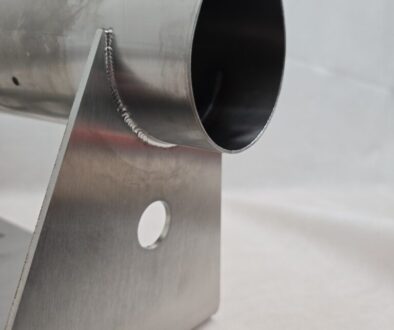
There is a clearer path forward. By consolidating key processes like sheet metal fabrication, machining, welding and final assembly under a single roof with one responsible supplier, you can fundamentally change your production timeline. This is about removing the traditional friction points that inflate lead times. Lock Ridge Tool Company’s integrated, U.S.-based model is built on this principle. One partner managing everything from initial concept to final product, all within our own facilities.
The Multi-Vendor Maze and Hidden Costs
To understand the benefit of consolidation, look at the drawbacks of the old way. When you use several different shops, you have to work with all their different schedules. The machine shop may be ready, but the sheet metal shop has a two-week backlog. The welder finishes on time, but assembly is stalled waiting for parts from another supplier. You end up spending more time coordinating shipping and tracking parts than managing the actual work.
Transport is a headache and a budget drain. Moving parts between many locations = paying freight fees over and over, risking damage during shipping and keeping up with different carrier schedules. Every mile a part travels between factories adds potential delay and extra cost. These accumulated handoffs create a project timeline that is unpredictable and often much longer than necessary.
How a Turnkey Model Creates a Smoother Flow
A single-supplier, turnkey approach turns that scattered process into a straight line. At Lock Ridge Tool, we bring sheet metal, machining, welding and assembly together in one place. This structure allows for a connected production flow that eliminates the waiting game between vendors.
Here’s how it works in practice: Our engineering team reviews your project with all capabilities in mind from the start. A part can be designed with an understanding of how it will be cut, formed and assembled right here. Once production begins, material moves from one department to the next without leaving the building. The fabricated sheet metal component goes directly to the machining cells for detailed work, then to the welding booth and finally to the assembly area. This continuous flow is managed under one schedule, with one team communicating at every step.
The advantages for your timeline are direct. Without external shipping delays between process steps, the project moves faster. Without multiple vendors to coordinate, communication is straightforward. You have one point of contact who knows the status of your entire job. Problems are solved collaboratively across departments without lengthy emails or phone tags between separate companies.
Decreasing Risk and Strengthening Control
The most obvious benefit is shorter wait times, but there’s more. Using one U.S. partner greatly lowers your project risk. You don’t have to rely on the stability or timetables of several different suppliers. If a question comes up during assembly, the person who machined the part is right there to answer it.
Quality oversight becomes more consistent and direct. Standards stay the same when every step is under one roof. Our team checks quality throughout production instead of only at the end. This helps us spot small issues early, when they are simpler and cheaper to fix.
Keeping the entire production run within the United States also provides a level of stability and proximity that overseas or multi-vendor setups struggle to match. You can visit the facility, meet the team building your product and review progress in person without complicated international travel. This proximity builds a true partnership and allows for faster decision-making.
Built for Demands That Can’t Wait
This model helps product developers, engineers and operations managers with tight deadlines and high-pressure projects. It’s for teams that need a prototype built quickly, without parts traveling the country. It’s for companies launching a new product that cannot risk a supply chain delay. It’s for any project where predictability, control and a shorter path to completion are important.
By choosing a partner like Lock Ridge Tool, you are choosing a simpler path. You replace a web of suppliers and logistics with a single, accountable team dedicated to delivering your complete product. The result is a noticeable reduction in your total lead time, lower logistical costs and a much smoother journey from your drawing to a finished part ready for use.